
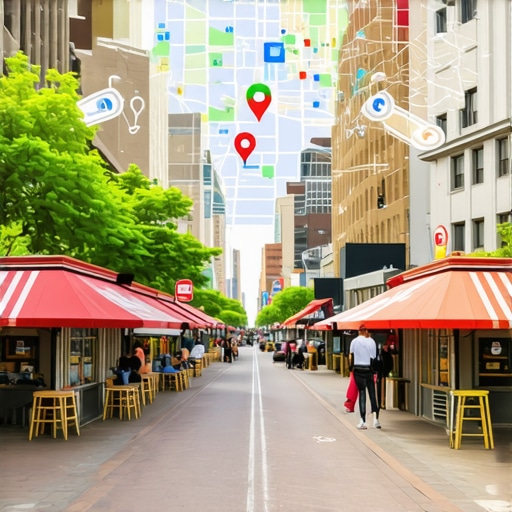
3 Local SEO Trends Every Madison Business Owner Should Watch in 2026
3 Local SEO Trends Every Madison Business Owner Should Watch in 2026
If you take a stroll down State Street or look toward the cranes currently reshaping the skyline near the Monona Terrace, it’s clear: Madison is booming. According to recent research from Isthmus, the digital and physical density of our city is reaching a fever pitch. But for the local business owner – the plumber in Sun Prairie, the boutique owner on Willy Street, or the attorney with an office on Doty Street – this growth is a double-edged sword. While there are more potential customers than ever, the competition for a spot in the local map pack has become a digital arms race. In 2026, google business profile seo is no longer a “set it and forget it” task; it is the frontline of your business’s survival.
As we navigate this new era, I often hear from local entrepreneurs who are frustrated. They’re ranking, but they aren’t seeing the phone ring. They’re following “best practices” from 2022, only to find that their traffic is being cannibalized by AI-generated summaries and corporate giants with deeper pockets. But here is the truth: SEO isn’t dying, it’s just evolving into something far more sophisticated. As Joy Hawkins and the team at Sterling Sky have noted, the traditional metrics of success are shifting. To win in 2026, you need a strategy built for the “Zero-Click” world. Before we dive into the trends, it’s worth asking: Why Most Madison SEO Advice Actually Fails Local Small Businesses? Usually, it’s because it treats Madison like a generic mid-sized city rather than the unique, neighborhood-driven ecosystem it actually is.
Trend #1: The Decline of the “Call” Button & The Rise of Zero-Click Conversions
For years, the gold standard of google business profile seo was the “Click-to-Call.” We measured success by how many people tapped that blue button. However, 2026 has ushered in a sobering reality for local marketers. Recent data from Sterling Sky, analyzing 179 profiles across 34 law firms, confirms a trend we’ve seen building for years: Clicks from Google Business Profiles (GBPs) are dropping, even when rankings remain stable or improve.
Why is this happening? Google is increasingly prioritizing Local Service Ads (LSAs) and AI-driven “Search Generative Experiences” (SGE) that answer user queries directly on the search results page. If someone searches for “emergency plumber Madison,” Google might now provide the pricing, availability, and a booking interface without the user ever needing to visit a website or even hit the call button. This is the “Zero-Click” conversion. If your google business profile seo isn’t optimized to provide instant answers, you are losing leads to competitors who are more “digestible” to Google’s AI.
For a business located near Camp Randall or the bustling Capitol Square, this means your profile must act as a mini-website. You can no longer rely on a link to your “Contact Us” page to do the heavy lifting. You need to utilize Google’s built-in messaging features, detailed FAQ sections, and real-time inventory updates. To stay ahead, you must understand The Specific GMB Move That Actually Gets Wisconsin Businesses Called in an era where users hate picking up the phone. Leveraging modern local seo tools is essential to track these non-traditional conversions and ensure your profile remains the most informative option on the screen.
Actionable Strategy for 2026:
- Enable Direct Messaging: If you aren’t responding to Google Messages within 15 minutes, you’re invisible.
- Maximize the Q&A Section: Don’t wait for customers to ask questions. Post your own frequently asked questions – specific to Madison – and answer them yourself. (e.g., “Do you offer validated parking for your State Street office?”)
- Optimize for LSAs: If you are in a service industry, your local seo services must include a managed Local Service Ads strategy to sit atop the AI Overviews.
Trend #2: Hyper-Local Neighborhood Authority
In the past, Google’s primary filter for local search was proximity. If you were the closest business to the searcher, you likely ranked. But in 2026, “Neighborhood Authority” has replaced simple proximity as the key ranking factor. Google’s algorithm has become incredibly nuanced at understanding the “vibe” and “relevance” of a business within specific Madison enclaves.
A business located in the Marquette neighborhood (Willy Street area) requires different digital signals than a business in Middleton or Oregon. Google is now looking for “Local Proof” that you are an active participant in your specific community. This shift is mirrored in the real world by initiatives like the Wisconsin Main Street Success Stories and the Main Street Makeover Contest sponsored by the WEDC. These programs highlight the importance of physical community investment, and Google’s AI is now sophisticated enough to crawl local news, event registries, and neighborhood forums to verify your local standing.
To rank google business profile effectively today, you need to stop thinking about “Madison” as one big bucket. You need to build signals that tie you to your specific street. This involves using google maps ranking service techniques that focus on neighborhood-level keywords and local partnerships. For example, if you’re a coffee shop near the Kohl Center, your profile and content should mention your proximity to University of Wisconsin events, local game-day traffic patterns, and collaborations with other downtown vendors. You can find more on this in our guide: 5 Neighborhood Content Tweaks That Outrank Big Madison Competitors.
To track this, savvy owners are using specialized local seo software that allows them to see their rankings on a block-by-block basis. If you’re ranking #1 in Shorewood Hills but #10 in Maple Bluff, you have a Neighborhood Authority gap that needs to be closed with localized content and community engagement.
Trend #3: Visual & Video Proof as a Ranking Signal
The days of using stock photos or a single grainy smartphone shot of your storefront are over. In 2026, Google’s AI performs what we call a “Video Audit” of your business. The algorithm isn’t just looking at the tags on your images; it’s using computer vision to analyze the content of your videos to verify “Real-World Authority.”
Why the change? To combat the flood of AI-generated spam and “ghost” businesses that don’t actually exist in the physical locations they claim. Google wants to see “Human Proof.” This means uploading short, high-quality video clips of your team working on-site in Madison. If you’re a contractor, show a 10-second clip of your truck parked in front of a recognizable Madison home. If you’re a restaurant, show the chef sourcing ingredients at the Dane County Farmers’ Market.
This visual evidence is a massive component of google business profile optimization in 2026. Profiles with regular video updates are seeing a significant boost in the local map pack because Google trusts them more. However, there are pitfalls to avoid, such as over-editing or using non-local metadata. Check out 5 Wisconsin GMB Photo Rules to Stop the Call Drop [2026] to ensure your visual strategy meets Google’s latest quality standards. When you aim to rank higher on google maps, the “realness” of your content is your greatest asset against national chains that can’t replicate local authenticity.
The 2026 Video Audit Checklist:
- Authenticity Over Production: Raw, “behind-the-scenes” footage often performs better than polished commercials.
- Geographic Markers: Ensure your videos occasionally capture local landmarks or street signs to anchor your location in the AI’s mind.
- Consistency: Upload at least one new video per week to show that your business is active and “alive” in the Madison market.
The 2026 Madison Local SEO Checklist
With the landscape shifting so rapidly, it’s easy to feel overwhelmed. Use this checklist to audit your current presence and ensure you aren’t falling behind your competitors on the Isthmus:
- Verify NAP (Name, Address, Phone): Ensure your data is identical across your GBP, your website, and local directories like the Madison Chamber of Commerce.
- Check for “Ghosted” Pins: Use a map tracking tool to ensure your business pin hasn’t been suppressed due to proximity to a “spammy” competitor.
- Audit LSA Spend: If you’re in a “high-intent” industry (legal, HVAC, plumbing), review your Local Service Ads performance monthly.
- Update Your “From the Business” Section: Use this space to mention recent Madison community involvement or local awards.
- Perform a Technical Audit: Follow these 3 Wisconsin GMB Audit Steps to Fix Poor 2026 Map Exposure to identify hidden penalties.
Conclusion: Human Content Beats AI Fluff
As we look toward the remainder of 2026, the message is clear: the businesses that win are the ones that lean into their “Madison-ness.” While AI can write a generic blog post about SEO, it cannot replicate the deep community roots, the neighborhood authority, and the visual proof of a business that truly serves the 608.
The “Zero-Click” era isn’t a threat; it’s an opportunity to provide better, faster service to your neighbors. By focusing on google business profile seo that emphasizes authority and visual proof, you can outpace national competitors who are too slow to adapt to the hyper-local nuances of our city. If you’re ready to stop guessing and start dominating the local map pack, it may be time to consult with a dedicated local seo agency or utilize professional-grade SEO Viper Tools to gain the data-driven edge you need.
Madison is growing. Make sure your business is the first one people see when they search for the best our city has to offer.